
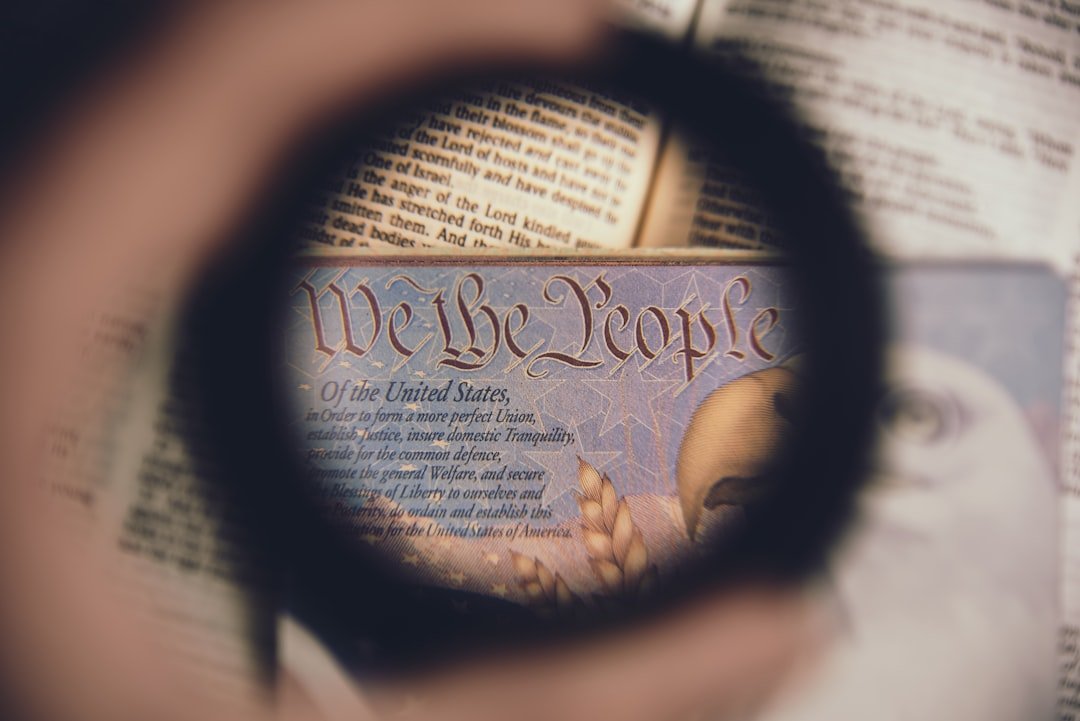
In the summer of 1787, the United States was not a secure nation waiting for a better rulebook. It was a fragile union burdened by debt, divided by regional interests, and governed by Articles of Confederation that left the central government unable to tax effectively, regulate interstate commerce, or reliably enforce its decisions.
Fifty-five delegates eventually attended the Constitutional Convention in Philadelphia. They agreed that the existing system was failing, but they disagreed sharply over what should replace it. Large states confronted small states, commercial interests clashed with agricultural ones, and defenders of state sovereignty feared the creation of another distant central power.
The US Constitution signed on September 17, 1787, therefore did not emerge from easy consensus. It survived because the delegates repeatedly accepted imperfect compromises. Several of those bargains preserved the convention, but some also embedded conflicts that would haunt the United States for generations.
1. Representation Nearly Split Large and Small States
The convention’s first major crisis concerned representation in Congress. The Virginia Plan favored a national legislature in which representation would be based on population. That approach benefited large states such as Virginia, Pennsylvania, and Massachusetts.
Smaller states saw the proposal as a threat to their political survival. Under the New Jersey Plan, each state would retain an equal vote, preserving the principle already used by the Confederation Congress. Delegates from smaller states feared that a population-based system would allow a few powerful states to dominate national policy.
The solution became known as the Great Compromise, or Connecticut Compromise. Congress would have two chambers: the House of Representatives, based on population, and the Senate, where every state would receive two seats. The arrangement did not eliminate the disagreement. It constructed a system in which two opposing principles—popular representation and state equality—would coexist.
2. Slavery Turned Representation Into a Moral and Political Crisis
Once delegates linked representation to population, they faced a brutal question: would enslaved people be counted? Southern states wanted enslaved populations included when seats in the House were distributed, even though those people had no political rights. Many northern delegates opposed that demand, particularly because the same southern delegates resisted counting enslaved people when taxation was discussed.
The resulting Three-Fifths Compromise counted three-fifths of the enslaved population for representation and direct taxation. The formula increased the political power of slaveholding states without granting freedom, citizenship, or representation to the people being counted.
This was not a minor technical adjustment. It gave slavery constitutional protection and influenced the balance of power in Congress and presidential elections. The convention also allowed the international slave trade to continue until Congress could prohibit it in 1808 and required the return of people who escaped enslavement. These bargains helped keep southern delegates inside the new union, but they transferred the unresolved crisis to future generations.
3. Delegates Feared Both a Weak President and an Elected King
The failures of the Articles of Confederation convinced many delegates that the country needed an independent executive. Yet memories of British monarchy made executive power deeply suspicious.
Delegates debated whether the executive should consist of one person or a committee. They argued over the length of the term, eligibility for reelection, removal from office, the veto, military command, appointments, and control over foreign affairs. A weak executive might be unable to enforce national laws. A powerful one might become an elected monarch.
The final Constitution created a single president with substantial authority, but surrounded the office with restraints. Congress controlled funding and legislation, the Senate participated in appointments and treaties, and impeachment offered a mechanism for removal. The resulting office was intentionally energetic and intentionally constrained—a tension that remains central to American government.
4. No One Could Agree on How to Elect the President
Choosing the president created another deadlock. Direct popular election seemed democratic, but some delegates doubted that voters spread across a large country would know enough about national candidates. Election by Congress risked making the executive dependent on the legislature. Selection by state governors or state legislatures created different problems of regional influence and divided loyalty.
The Electoral College emerged late in the convention as a compromise rather than as a single, perfectly designed theory. States would appoint electors, and those electors would vote for president. If no candidate secured a majority, the House of Representatives would decide the election, voting by state delegation.
The system reflected several earlier compromises, including state power, federalism, and slavery-based representation. It also assumed a political world without permanent national parties. The rapid development of parties exposed weaknesses that eventually required the Twelfth Amendment in 1804.
5. Federal Power Alarmed Defenders of State Sovereignty
The convention had been called to revise the Articles of Confederation, but the delegates soon moved toward replacing them. That decision alone was revolutionary. The proposed government would act directly on individuals rather than merely requesting cooperation from sovereign states.
Supporters of stronger national authority wanted Congress to tax, regulate commerce, raise armed forces, and enforce federal law. Opponents feared that such powers could erase state independence and threaten personal liberty.
The US Constitution divided authority instead of placing it entirely at one level. The federal government received enumerated powers, while states retained broad authority over local matters. The Supremacy Clause made the Constitution and valid federal laws superior to conflicting state laws. At the same time, the structure of the Senate and the original method of selecting senators gave state governments a direct role in national power.
This balance was never fully settled in Philadelphia. Arguments over federalism continued through ratification, the Civil War, Reconstruction, the New Deal, and modern disputes over the reach of federal authority.
6. Commerce Threatened to Divide Northern and Southern Economies
Commercial policy exposed the country’s regional divisions. Northern merchants generally favored national power to regulate trade and impose duties. Southern exporters feared that Congress might tax exports or use commercial power against an economy increasingly dependent on slave labor and agricultural exports.
The final bargain prohibited taxes on exports and allowed Congress to regulate interstate and international commerce. A related compromise prevented Congress from banning the international slave trade before 1808, although Congress could impose a limited tax on imported enslaved people.
These provisions strengthened the national economy while protecting important southern interests. As with the representation bargains, however, agreement came at a profound human cost. The US Constitution created a more workable commercial union while postponing confrontation with slavery.
7. The US Constitution Contained No Bill of Rights
For many Americans, the document’s most alarming feature was what it lacked. The convention rejected proposals to add a declaration protecting freedoms such as speech, religion, press, jury trial, and due process. Some delegates argued that the federal government possessed only the powers expressly granted to it, making a bill of rights unnecessary. Others warned that listing certain rights might imply that unlisted rights did not exist.
George Mason, Elbridge Gerry, and Edmund Randolph refused to sign the final document. The absence of explicit protections became one of the Anti-Federalists’ strongest arguments during ratification.
The US Constitution might not have survived without a political promise to add amendments. James Madison introduced a series of amendments in the first Congress, and ten were ratified in 1791 as the Bill of Rights. In that sense, the Constitution Americans recognize today was completed not only in Philadelphia but also through the struggle over ratification.
Why the US Constitution Survived
The framers did not solve every conflict. They designed institutions capable of containing conflict: two legislative chambers, separated powers, checks and balances, federalism, elections, impeachment, and an amendment process.
That achievement should not turn the convention into a simple story of heroic agreement. Some compromises were ingenious; others protected injustice. The document created a stronger republic, but it also preserved slavery and excluded women, Native peoples, enslaved people, and most people without property from meaningful political power.
The US Constitution survived because it was neither completely fixed nor easily changed. Its amendment process allowed later generations to abolish slavery, define national citizenship, expand voting rights, and alter the machinery of government. Its endurance reflects both the durability of the original framework and the efforts of people who forced the country to confront what the framers left unresolved.
To place the convention in its wider historical setting, explore Story Chronicles’ account of the American Revolution through Native American eyes.
Frequently Asked Questions
When was the U.S. Constitution signed?
The US Constitution was signed on September 17, 1787, at the conclusion of the Constitutional Convention in Philadelphia. It took effect after the required number of states ratified it, and the new federal government began operating in 1789.
How many delegates signed the Constitution?
Thirty-nine delegates signed the document. Three delegates present on the final day—George Mason, Elbridge Gerry, and Edmund Randolph—refused to sign.
What was the most important compromise at the convention?
The Great Compromise was essential because it resolved the dispute over congressional representation. However, the compromises over slavery were equally consequential because they shaped political power and preserved slavery within the new constitutional order.
Why was the Bill of Rights added later?
The original Constitution contained no separate bill of rights. Opposition during ratification made explicit protections politically necessary, leading to the ratification of the first ten amendments in 1791.


